Swap the chunky jeans belt on your tailored trousers for one about 1 inch wide, and the waistband lies flat instead of bunching at every loop. Belt width and color look like small details. They still decide whether a belt goes on most mornings or stays coiled in a drawer.
The usual culprit is a single belt bought on a whim: too wide for work trousers and a shade off from every pair of shoes. Sort out width first. It costs nothing to work out, and it narrows down everything that follows.
Measure your loops before you choose a belt width
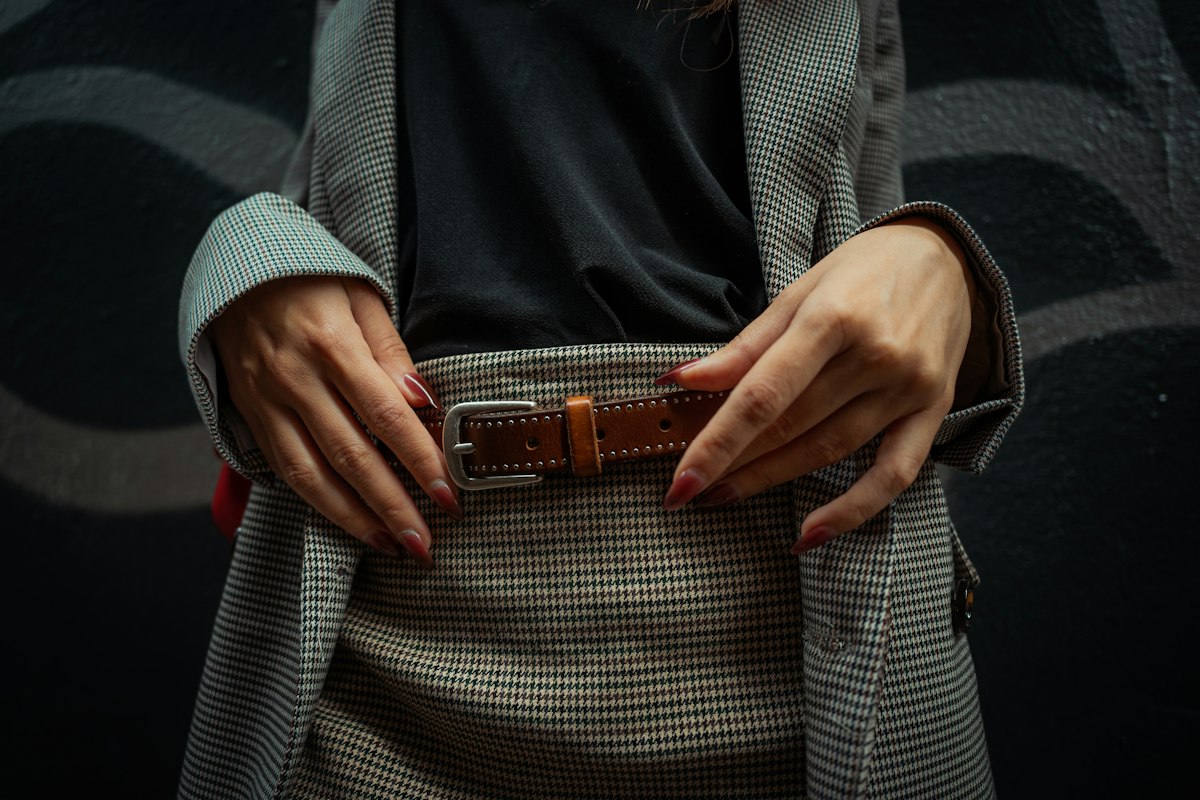
Hold a ruler against the inside of the belt loops on the trousers and jeans you wear most. That measurement is the widest strap they’ll take. For a rough reference, one belt maker’s size guide lists slim belts at about 1 inch (25 mm), typical women’s trouser belts near 30 mm, and standard denim belts at 1.5 inches (38 mm). The same guide notes that women’s trouser loops are usually cut for the narrower straps, so a jeans belt may not go through them at all.
Wear trousers more than jeans? Start narrow. A 1-inch belt slips into tailored loops and still looks tidy on jeans with a front-tucked tee. If you live in denim, go wider so the strap fills the loops instead of shifting around in them. Before buying, thread a belt you already own through those loops, sit down, and bend forward. If the waistband folds over or the loops strain, go narrower.
Length is simpler. Using the method from Belts.com, measure your current belt from the fold at the buckle to the hole you actually use. If you fall between sizes, round up.
Pick the color from your shoes, not your trousers
Your trousers change daily, while your shoes probably rotate among the same few pairs. Line up the three pairs you wear most. Brown loafers, tan sandals and cognac boots point to a mid-brown belt that sits comfortably with all three. Black ankle boots and black flats point to black. If your shoes are a mix of the two, choose tan or mid-brown.
You don’t need an exact match. Keep the depth consistent, dark with dark and light with light. If white sneakers are your daily shoe, match the belt to your trousers instead. That gives you one unbroken line from waist to hem. If your only belt shares a color with none of your shoes, this is the step worth spending money on.
Match the finish to how dressed-up the outfit is
Pair smooth leather and a small, plain buckle with trousers, fine knits and ballet flats. Save suede, woven leather or a chunkier buckle for jeans, sneakers and boots. For the buckle metal, repeat the gold or silver you already wear in your jewelry or on your bag.
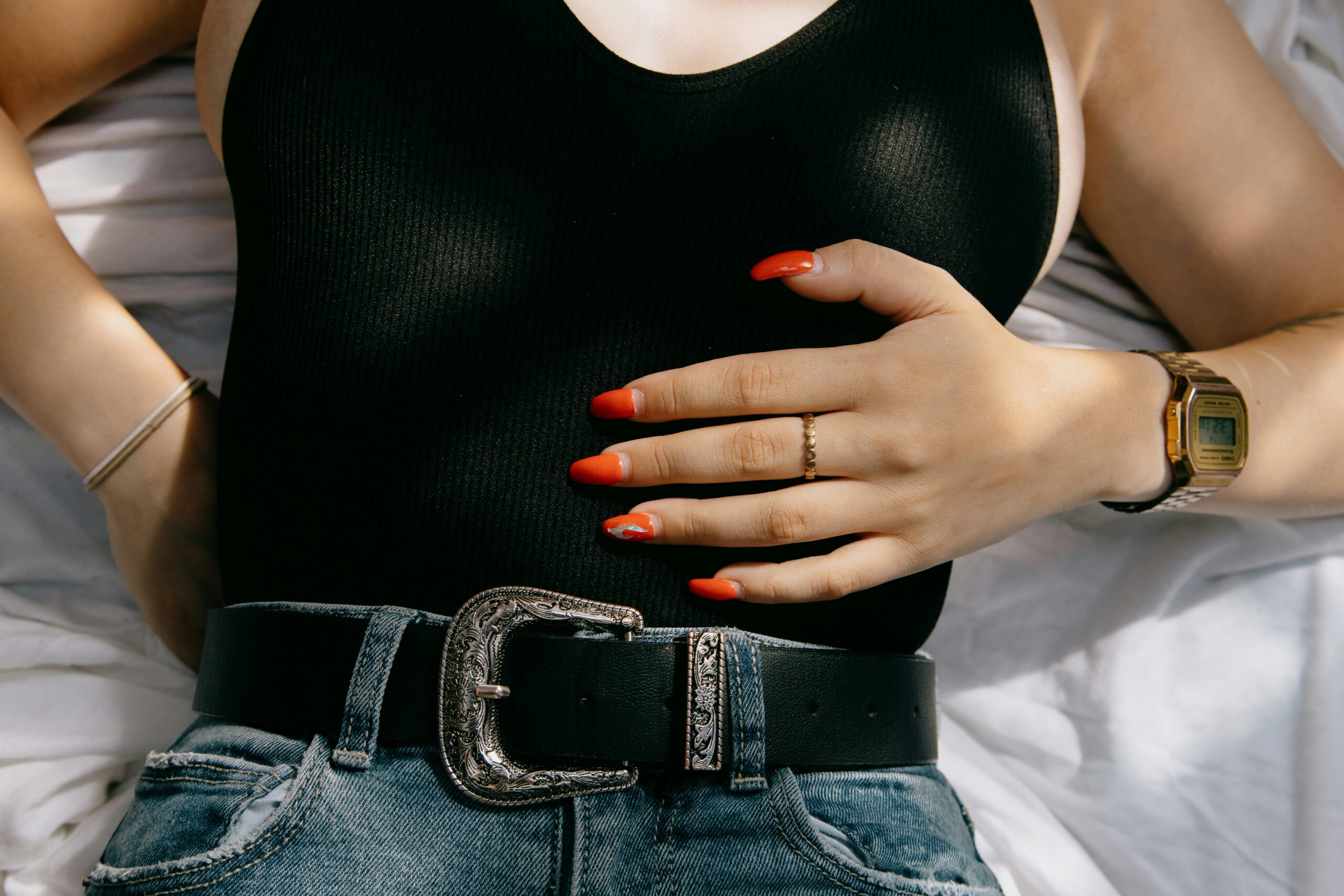
Here are two outfits that show the difference.
Navy straight trousers, a tucked striped shirt, a 1-inch smooth black belt and black ballet flats suit a smart casual office or dinner.
For weekends, half-tuck a white tee into straight-leg jeans and add a 1.5-inch tan suede belt with tan loafers or white sneakers. The heavier denim balances the wider, softer strap, and the slim belt keeps the trouser waistband smooth.
Belting dresses and long knits
Belts around 2 inches and up are made to go over clothes rather than through loops. Buy one only if you belt dresses often. Otherwise, borrow your narrow trouser belt for a shirtdress or a long cardigan. Buckle it at your natural waist for definition, or leave it a hole looser and let it rest lower on your hips for a softer shape.
Before heading out, reach both arms overhead, then sit. If the belt creeps up and fabric bunches above it, loosen it a hole or drop it a little lower.
Keep the belt that passes the sit-down test, even if a prettier one is waiting in the drawer. You can pass the prettier one on to someone whose loops it fits.