
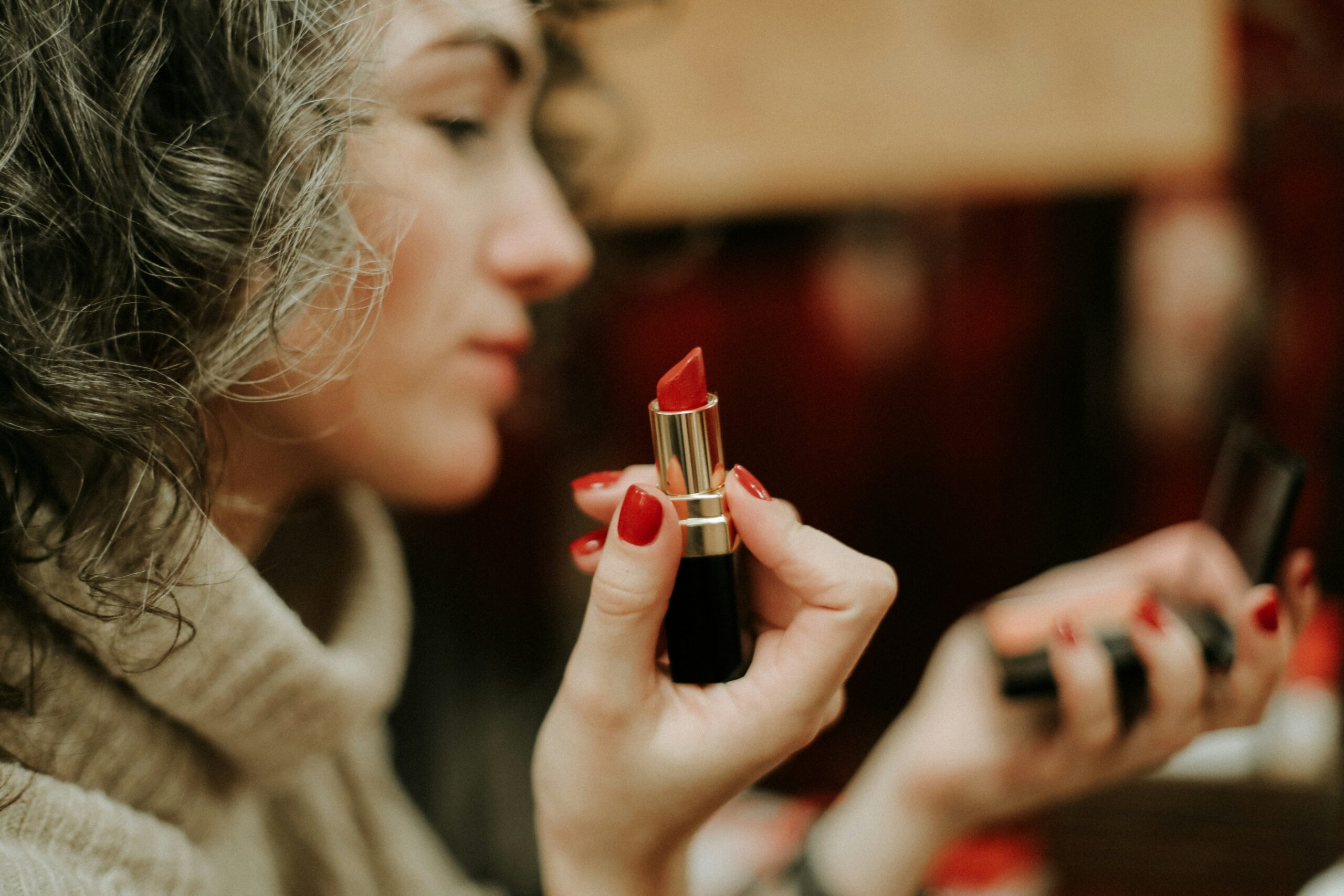
The quickest way to find an everyday lip color is to answer one question: how much contrast do you want against your natural lips? A shade close to your own looks effortless and forgives a quick swipe. A shade a few steps deeper looks more bold and deliberate. After that, choose the finish and upkeep that suit your everyday activities.
Pick the right level of contrast for your everyday lip color
Stand near a window with bare lips and describe the color you see. It might be rosy pink, mauve, soft brown, or deep berry, or your lips might be darker toward the outer edges. Natural lip color varies widely across skin tones, so treat this as your own reference point rather than a chart. Charlotte Tilbury’s guide names shades that sit close to your natural lip color as the easiest to wear. That makes practical sense, because when a near-match fades or smudges, there is little difference to notice.
For medium contrast, go one or two steps deeper or brighter: rose to raspberry, brown-pink to brick, mauve to plum. High contrast means a red, deep wine, or bright coral as your daily shade. If your lips are two-toned, a satin shade slightly deeper than the darker area evens out the color, while a sheer formula lets both tones show through.
Stay within one shade of your own if you want your lips on a good day. If you like a color people notice, reach for medium or high contrast and plan on a little more upkeep.
Choose a finish by how it feels
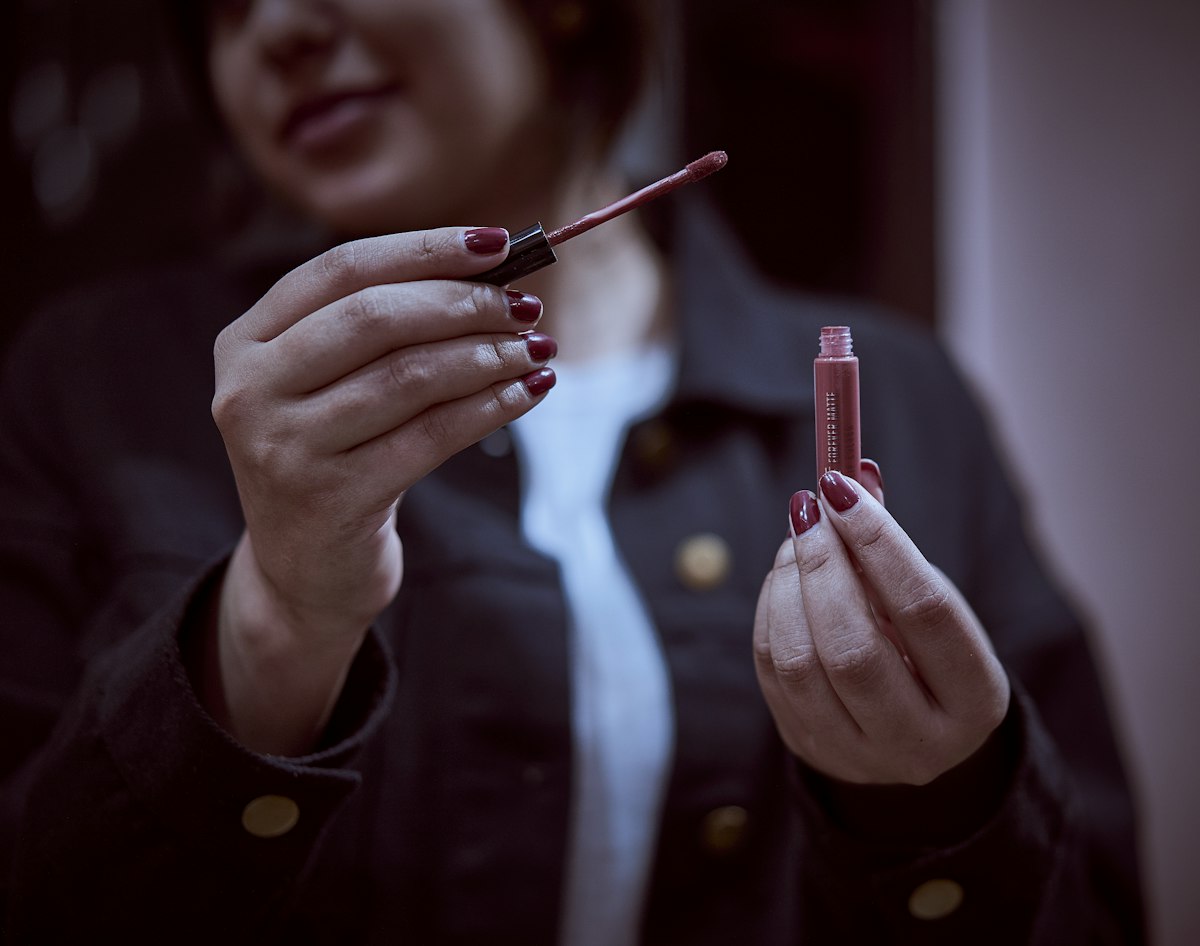
Finish changes how a lipstick feels as much as how it looks. Sheer formulas give a light wash of color. According to QC Makeup Academy, they glide on much like a balm and need little precision, but a single coat fades fairly quickly. Cream and satin formulas build more coverage with a soft sheen. Matte gives the flattest, most opaque color. If matte formulas tend to feel dry or tight on your lips, a satin still gives you deep color with a little more slip.
Here’s how the three compare at a glance:
- Sheer or tinted balm: light coverage, little precision needed, reapply often.
- Cream or satin: medium to full coverage, a mirror helps, reapply after meals.
- Matte: full coverage, needs a careful edge, usually lasts the longest.
When comfort comes first, start with satin or sheer. Matte makes sense if you dislike shine and enjoy drawing a crisp line.
Match upkeep to the day you actually have
A shade only becomes an everyday one if it fits the attention your day allows. Charlotte Tilbury’s wear guide notes that matte formulas tend to stay put longer than creamy ones. It also says that food and drink wear any lipstick down over time.
If your mornings are tight and you won’t see a mirror until evening, choose a low-contrast sheer or satin. As it wears, whatever remains stays close to your own color. For a deeper shade, keep the tube and a matching liner in your bag and touch up after lunch.
Before buying anything, test with a lipstick you already own:
- Tap it onto the center of your lips with a fingertip for a sheer wash, or apply it straight from the bullet for full coverage. For a little more color, press on a second thin layer.
- Go about your morning as usual, coffee included.
- A few hours later, check your lips by a window.
Has the center worn away and left a ring at the edges? Then move toward a sheerer finish or a shade closer to your natural lips. If the color still looks even, that depth and finish suit your days, and you can stop there.
For most women, a satin or sheer shade one step deeper than their natural lips is the easiest place to start. It goes on in seconds, feels comfortable, and still looks fine after coffee without a mirror.