
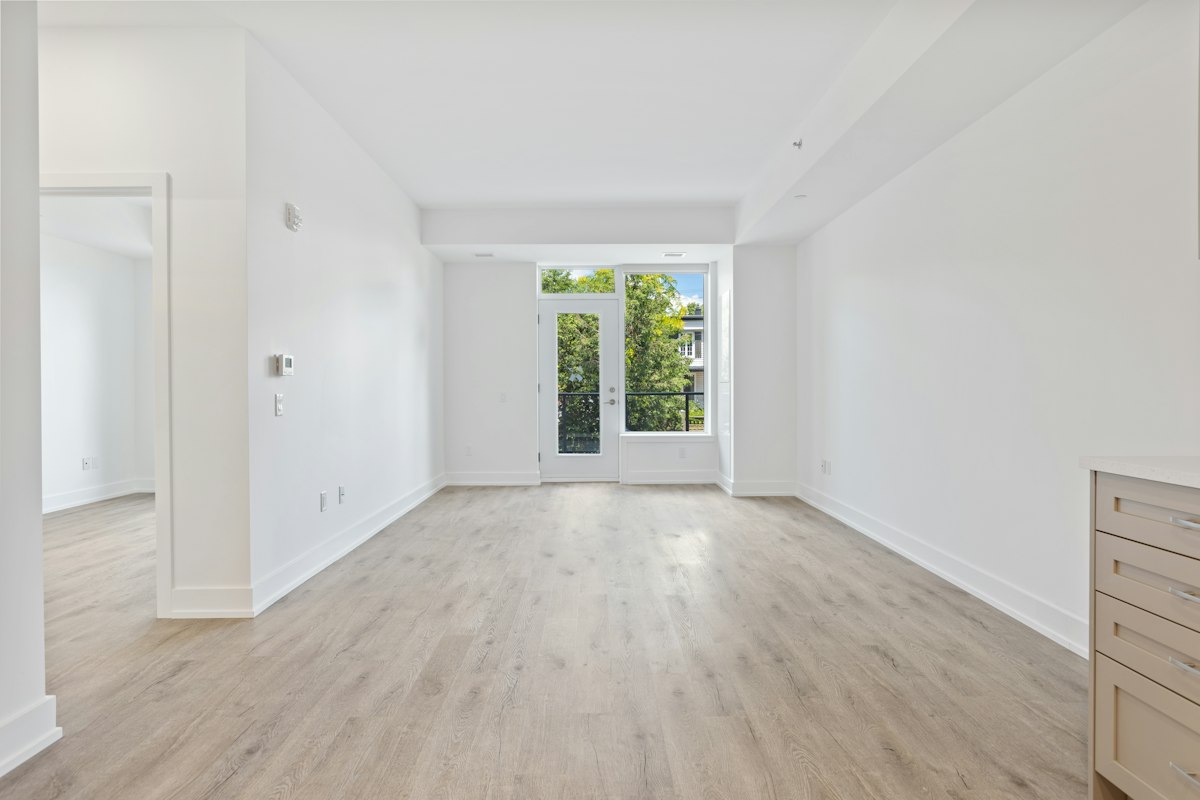
If your front door opens straight into the living room, an entryway with no hallway can still work. Claim one narrow strip of wall and floor beside the door, about 12 inches deep, and give keys, bags, and shoes a fixed spot inside it. The first step is free: open the door fully and see where it lands.
Map the door swing in an entryway with no hallway
A no-hallway entry often fails because a basket or bench sits where the door needs to open. The door bumps it every day, and things pile up around it. Open the door as far as it goes and run painter’s tape along the floor where its edge travels. Keep everything inside that curve clear. Rocabu’s layout guide suggests leaving 30 to 36 inches of clear space in the door’s swing path.
Next, look at the wall on the handle side, opposite the hinges. The open door doesn’t cover it, so your landing zone usually belongs there. Tape a rectangle on the floor about 12 inches out from that wall. If the door opens into a corner with no free wall, place a slim freestanding coat stand just outside the tape line instead.
Lift keys and bags onto the wall
Hooks keep the floor clear when the walkway is tight. Hang 2 or 3 at shoulder height for bags and jackets. Below them, add a small shelf with a shallow dish for keys, wallet, and sunglasses, so everything you grab on the way out sits in one place.
If you rent, adhesive hooks can work when you follow the maker’s steps. 3M’s Command instructions say to wipe the wall with rubbing alcohol, wait an hour before hanging anything, and stretch the strip slowly downward to remove it. Compare the weight rating on the pack with your fullest work bag. If the bag weighs more, use the coat stand or ask your landlord about a screwed-in rail.
Before you commit, hang your heaviest bag where the hook will go and open the door fully. If the bag or a coat sleeve catches on the door, move the hook a few inches along the wall and test again.
Give shoes a defined edge
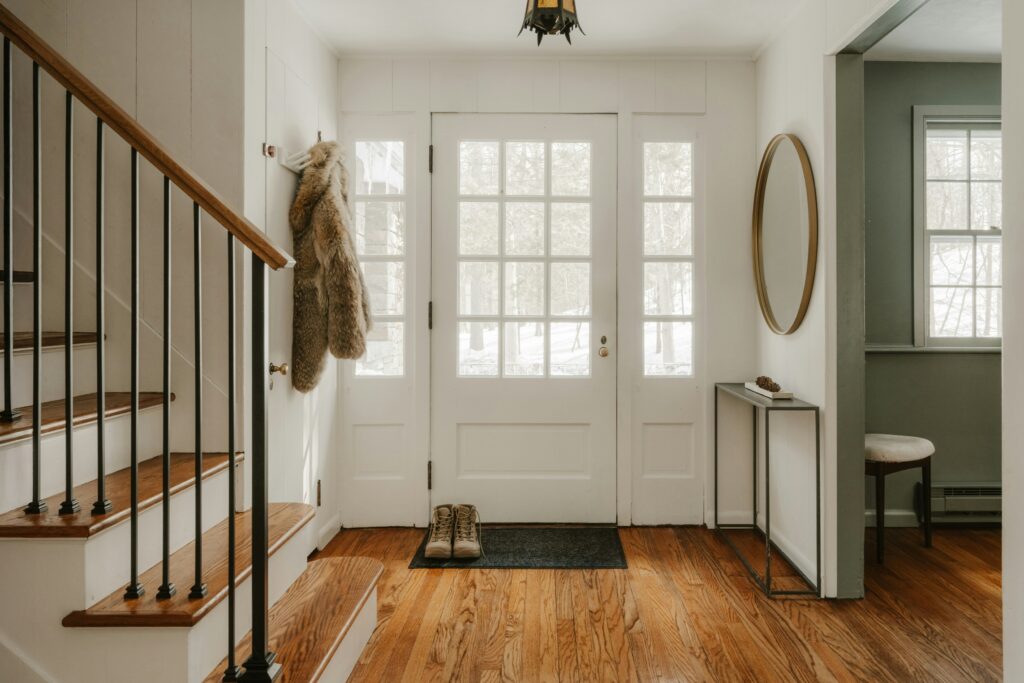 Photo by Clay Banks on Unsplash
Set a low boot tray or washable mat inside your taped rectangle. It gives shoes a clear place to go and catches grit before it reaches the living room rug. Keep this week’s pairs by the door and move the rest to a closet or under the bed.
If you’d rather keep shoes out of sight, consider a slim cabinet. Rocabu’s spacing guide puts a typical entry console at 12 to 15 inches deep and recommends a 36-inch walkway, or 30 inches in tighter spaces. Measure from the wall to your tape line to see whether a cabinet fits, and anchor tall, narrow pieces as their instructions direct. With no room for furniture at all, a canvas bin under the nearest chair still gives shoes a set place.
Separate the zone from the living room without walls
A few markers show where the entry ends and the living room begins. Lay a small flat-woven runner in a darker tone to mark the floor; it also shows tracked-in dirt less than a pale rug. Add a small lamp on the shelf or a plug-in wall sconce so you can find your keys after dark. If there’s no outlet near the door, a battery-powered puck light under the shelf does the same job without a cord across the floor.
If your sofa backs toward the door, a narrow console behind it can hold the key dish and lamp together. Keep at least the walkway width clear between the console and the door’s tape line. For the rest of a shared room, see our guide to organizing an open plan living and dining area.
Start with less than you think you need: one hook, one key dish, and a mat on the handle-side wall. If you reach for them every day for a week, add the next piece.