An open shelf rarely gets crowded all at once. A bowl goes up, then the good mugs, then a candle someone gave you, a jar of pens and the takeout menu. A few months later the whole thing looks like a yard sale with better lighting. If you want to style an open shelf so it looks considered and still holds what you use, take everything off first.
Yes, everything. Wipe the boards and spread the contents on a table. Then you can judge each item by how often you reach for it, not by where it happened to land.
Sort by use before you think about looks
Split the pile three ways: things you use most days, things you use a few times a year, and things kept only for looks. The Kitchn notes that everyday dishes get washed so often that dust barely settles on them. A cake stand used twice a year just needs a rinse before it goes on the table. Glasses you use only now and then can stay on the shelf if you store them upside down.
The colander and the plastic tubs go behind a door. Decorative pieces have to earn their spot, so keep two or three. If your cupboards are already packed, our small kitchen storage guide has ways to free up space behind one door. A lidded basket on the shelf can also hide the overflow.
Group, then leave a gap
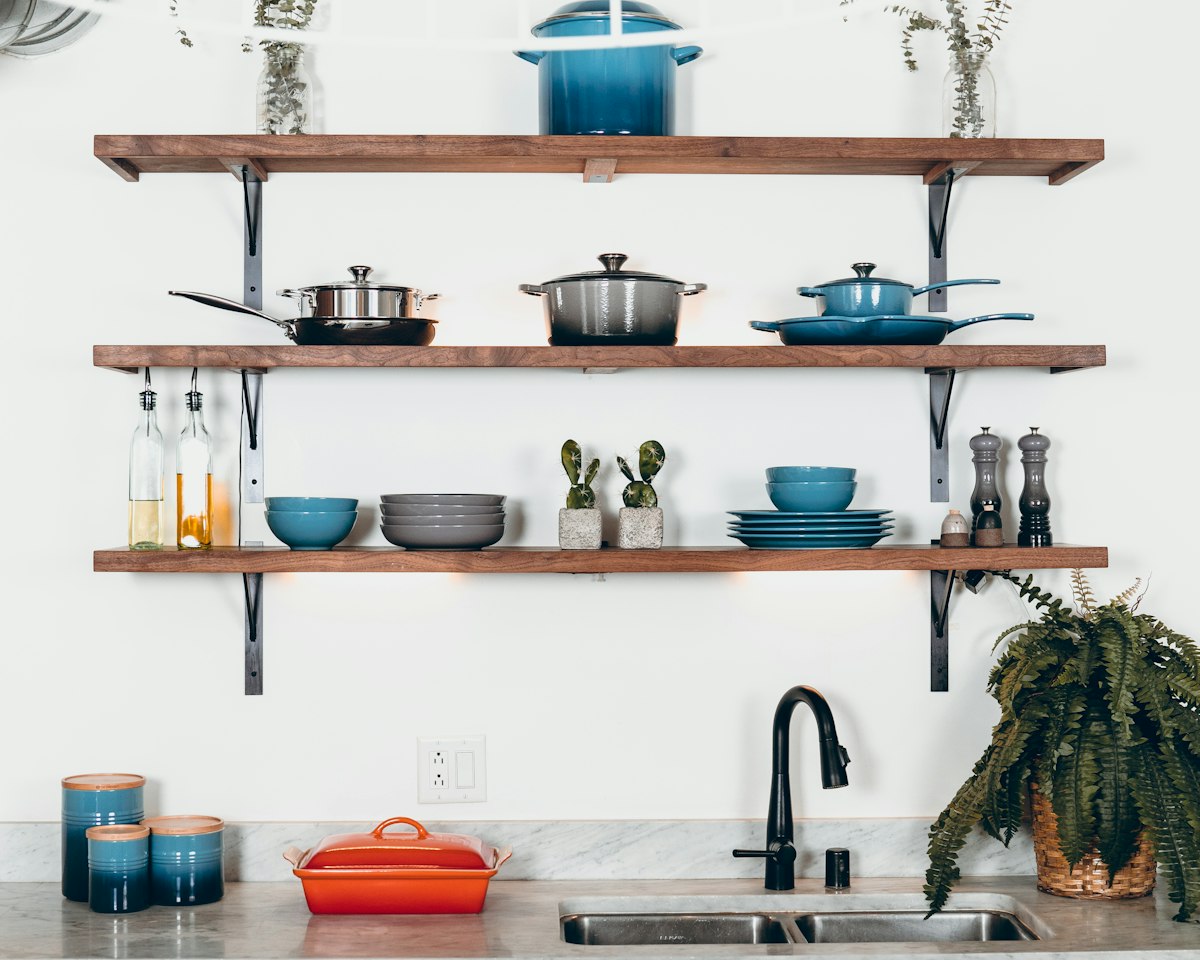
A shelf stays useful and calm when you follow one pattern: a cluster of things that belong together, then some empty board, then the next cluster. A stack of 6 plates with the bowls nested on top is one group. Three canisters in a row are another. Leave at least a hand’s width between groups so each one is easy to lift out.
Mix heights inside each cluster, such as a tall jar beside a low stack.
Magnolia suggests pairing taller objects with lower ones and varying the empty space from shelf to shelf. The top shelf might hold one wide group with room to spare, while the lower shelf carries two.
A short shelf may only have room for one real group. Put a single object at the other end, like a small plant or a jug, and the gap still has something to frame it.
Repeat one color or one shape
Pick one thread and carry it through every group: white ceramics, amber glass, pale wood, or round shapes. Three white pieces spread across two shelves connect the groups even when nothing else matches.
You probably own the thread already. Rinse out matching jam or pasta sauce jars and fill them with rice, oats or pens. If your dishes come in every color, stack them by color so each stack becomes one solid block. Keep the busiest patterns on the lower shelf, where other things will partly hide them.
Test the open shelf before you call it done
Take a photo of the shelf from across the room and look at it on your phone. Crowded patches and lopsided ends are easier to spot on a small screen. If one end looks heavy, move a group toward the middle or swap it for something smaller.
Then do a reach test. Lift down the thing you use most with one hand, without moving anything else. If you can’t, it’s buried too deep.
In a rental, the shelf may hang on anchors you didn’t choose or on adhesive strips. Look for a weight rating on the packaging or the maker’s site. If you can’t find one, put the heaviest stacks on the lowest or best-supported shelf and keep the top for lighter things.
The gaps are usually the first thing to go. When something new comes home, take something else off instead of squeezing it into the space that makes the rest of the shelf work.