
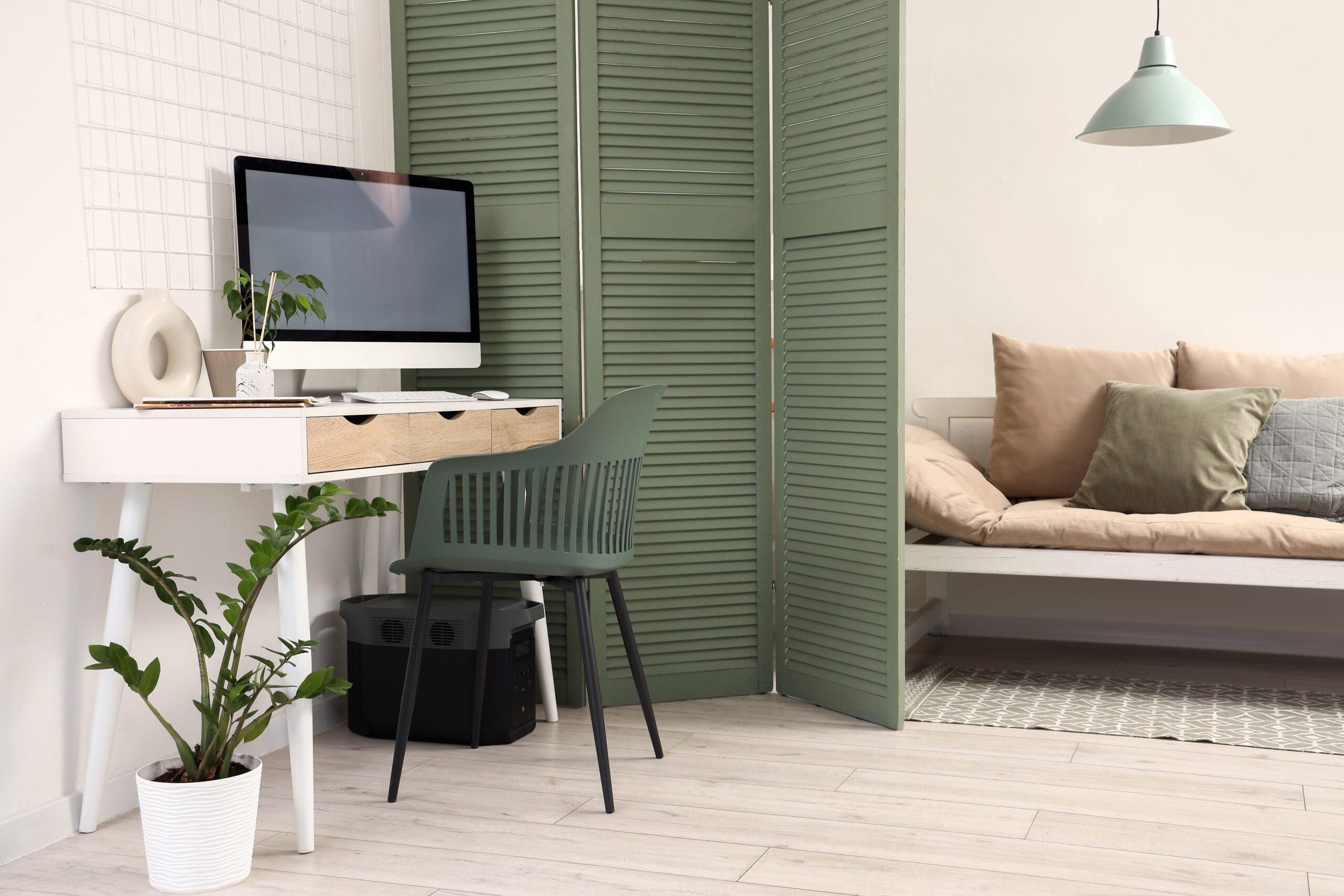
The laptop starts out on the coffee table. Then it moves to the arm of the sofa, and by Thursday a charger is trailing across the rug and the mail pile has become the office. A desk corner in a living room can fix that, as long as it stays inside its own boundaries. Before anything new comes through the door, get a roll of painter’s tape.
Step 1: Tape the footprint, chair included
It’s easy to measure only the desktop and forget the chair, which needs room to slide back so you can stand up. House Plans Helper gives a minimum of 23 inches from the desk edge to the nearest obstruction, and 30 inches for a roomier chair (chair clearance). The same guide puts the limit of useful work depth at about 30 inches. Beyond that, the extra depth mostly collects mail.
Tape out the desk and the chair zone on the floor, then leave the tape down for two days. Walk from the sofa to the window. Open any nearby door all the way. Carry a laundry basket through. If you keep stepping around the tape, try a narrower desk or a different wall. Before buying anything, set the console or small table you already own in the taped spot. A laptop and a notebook often need less surface than you’d expect.
Step 2: Turn the desk side-on to the window
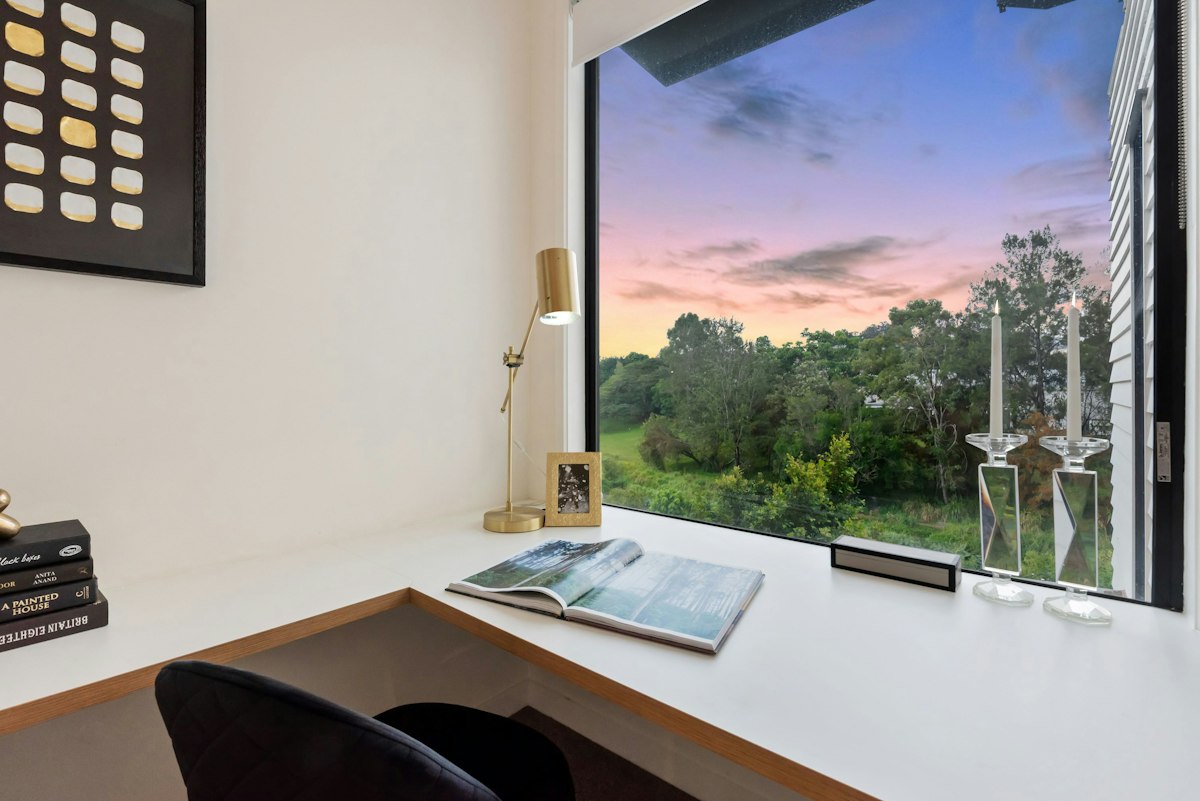
Where the window sits makes the difference between a comfortable corner and an afternoon of squinting. Colorado State’s ergonomics guidance suggests setting screens at a right angle to windows. That cuts glare from a bright window behind the screen and reflections from one behind you. In a living room, this often points you to a side wall rather than the spot under the window. You give up the view, which is easier to forgive than glare.
For evenings, put a lamp on the side opposite your writing hand so your hand doesn’t shadow the page. A compact lamp with a narrow base leaves room for a mug. If a floor lamp already lives elsewhere in the room, move it beside the desk before shopping. To check the setup, sit as you normally would and switch the screen to black. If you see reflections or a bright window behind the screen, angle the desk a little further.
Step 3: Gather the cables before they spread
Loose cords are usually what lets a desk spill into the rest of the room. Plug everything into one power strip and lift the strip off the floor. You can zip-tie it to a desk leg or set it inside a lidded cable box. Bundle the chargers with reusable hook-and-loop ties, and run the one remaining cord along the baseboard rather than across the path to the sofa.
Resist tucking it under the rug. Cords there can overheat or get crushed, and that harms the insulation (cord safety). If you rent, adhesive cable clips under the desktop keep wires up without drilling. Test one on a hidden spot first if the finish is delicate.
Step 4: Reset the desk corner at the end of the day
The evening routine is what keeps this a desk corner rather than a desk that has taken over the room. Give work things one closed home: a lidded basket under the desk, a drawer, or a box on a nearby shelf. At the end of the day, the laptop, notebook, and spare cords go in. Push the chair all the way under and switch off the lamp. Leave one living-room object on the surface, like a plant or a small bowl, so the corner looks like furniture and not a paused workday.
Then sit where you usually watch TV and look over. If you can see a screen, a cable, or a to-do list, something still needs a place to go.
Repeat the tape test in a month or so. Routines change, and the layout that worked in October may need to shift a foot once the extra throws and the reading chair come out for winter.