
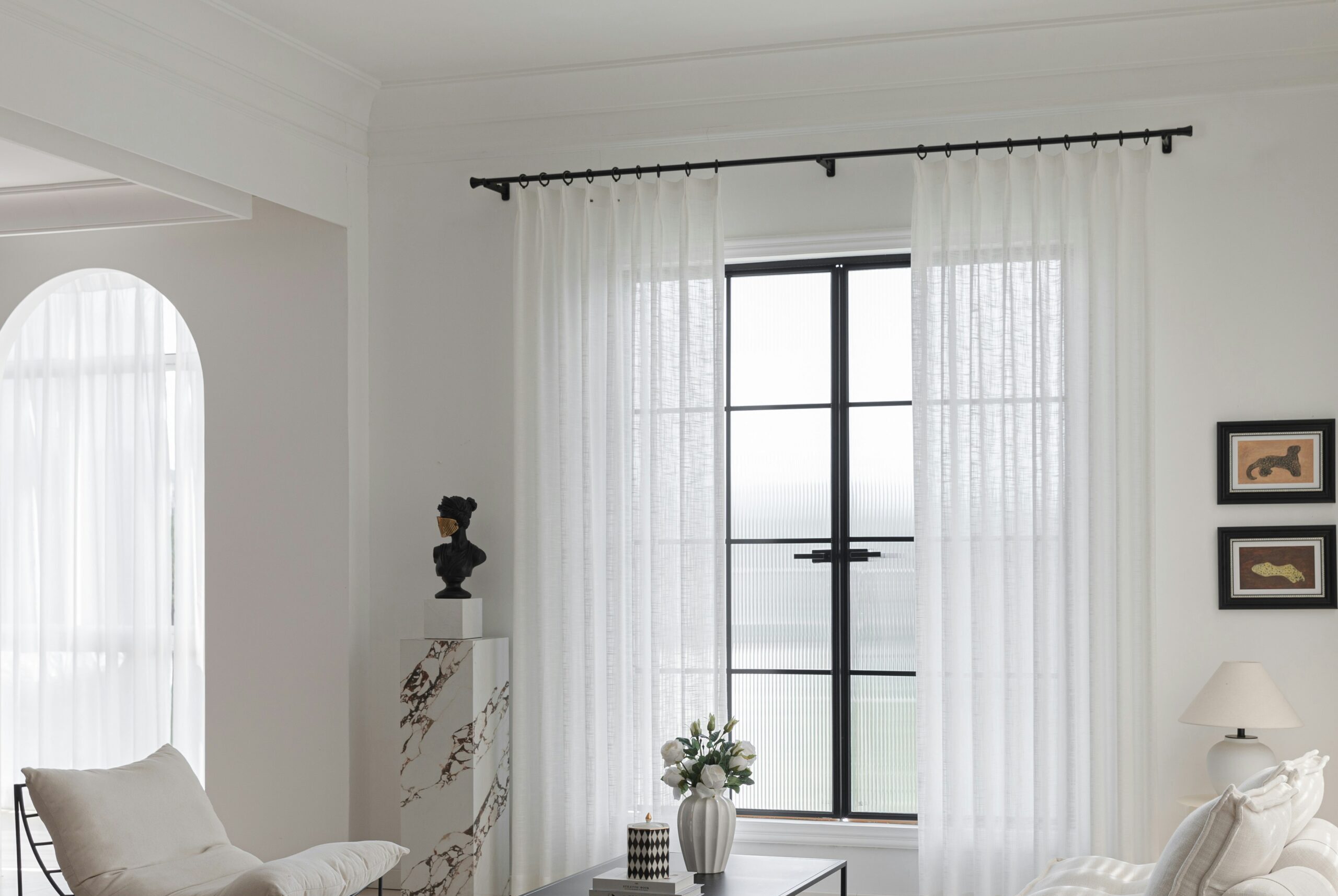
Most curtain trouble starts at the window trim. The brackets go straight into the frame, the rod ends where the glass ends, and the open panels still cover a third of the view. Then the hem stops 3 inches short of the floor, like trousers after a hot wash. Before you blame the fabric, look at the curtain rod. Where it sits decides how much light comes in and how long the panels need to be.
How high should the curtain rod go?
Start by measuring from the top of the window frame to the ceiling. Halfway between the two is a sensible place to begin. If the frame top sits at 84 inches in a room with 96-inch ceilings, a rod at roughly 90 inches leaves space for brackets and finials without crowding the ceiling. In low rooms, The Shade Store suggests going right to the ceiling or using a ceiling-mounted rod. If you have crown molding, tuck the rod just below it.
Height affects privacy as well as proportion. If streetlight creeps in over the top of the panels, raise the rod slightly so the fabric overlaps the frame by a little more.
How far past the window should it extend?

The same guide suggests about 12 inches beyond the frame on each side. That way, open panels gather against the wall instead of the glass. A 36-inch window then needs a 60-inch working span, plus the finials. How much wall a bunched panel takes up depends on the fabric and its fullness, so check before you buy a rod. Gather one of your existing panels (or a folded bedsheet) against the wall beside the window and measure it.
A corner or door frame sometimes leaves only 6 inches on one side. In that case, use 6 on both sides so the window still looks centered. In a bedroom where morning light slips around the edges, a wraparound (return) rod curves the fabric back to the wall and closes most of that gap.
How long should the curtains be?
Hang the rod first. Then measure from the rod to the floor at both ends and in the middle, since floors are not always level. Rings and grommets set the top of the fabric slightly below the rod, so account for that too. There are standard lengths to choose from:
- Float: about ½ inch above the floor. This suits panels you open every day, level floors, and rooms with pets or crawling children.
- Break: rod-to-floor plus 1 to 2 inches, so the hem just meets the floor. It’s more forgiving if the floor slopes a little.
- Puddle: plus 3 to 6 inches. Keep this for panels that mostly stay put, because extra fabric on the floor drags whenever you pull it and collects dust between vacuums.
Ready-made panels come in fixed lengths, so your number may fall between two of them. If it does, buy the longer panel and hem it, or raise the rod an inch or two if there’s room above the window.
What if a radiator or a lease gets in the way?
If a heater sits under the window, floor-length curtains will drape straight over it. You have two options. Stop the panels at the sill or just below the trim. Or extend the rod far enough that the open panels hang beside the heater rather than in front of it.
Renters who can’t drill have choices too. A tension rod inside the frame handles a sheer café curtain. For full panels, Kwik-Hang says its no-drill brackets hold up to 20 lbs each when tapped into wood trim. Weigh a panel on a bathroom scale and check the total against that rating. Because these brackets sit on the trim, you give up some height and width. Lightweight panels that still reach the floor keep the window from looking cut off at the knees.
Whatever hardware you choose, mark the bracket spots with painter’s tape and check that the marks are level (a phone level app is fine). Then step back before you commit. The same habit helps with hanging art above a sofa. Leave the tape up for an evening and notice where the light still gets in.