A “fits 13-inch cube” label sounds like a promise, but it is closer to a hint. Brightroom’s Wave Medium bin at Target carries that label and lists 11.3 x 13.8 x 5.3 inches. At 5.3 inches tall, it fills well under half the height of a 13-inch opening. That works for flat things like scarves or chargers and wastes space for anything else. Finding storage bins that fit takes 3 numbers, a tape measure, and one cardboard stand-in.
Step 1: Storage bins that fit start with the opening
Measure width at the narrowest point between the sides. In a cabinet, that may be the face frame or a door hinge rather than the inside wall. Measure height from the shelf surface to the underside of whatever sits above it, including any lip or bracket. Then measure depth from the front edge back to the first obstruction: a back rail, a pipe, or the inside of a closed door.
Write all 3 numbers down. Measuring the empty board instead is how a 12-inch basket ends up against an 11-inch frame.
Step 2: Subtract room for your hands
Decide how the bin will come out before you shop. If it slides forward by a front handle, you need a little play at the sides and a finger’s width overhead. If you plan to tilt it up to lift it out, or reach in from above while it stays put, leave enough headroom for the front edge to clear the shelf lip.
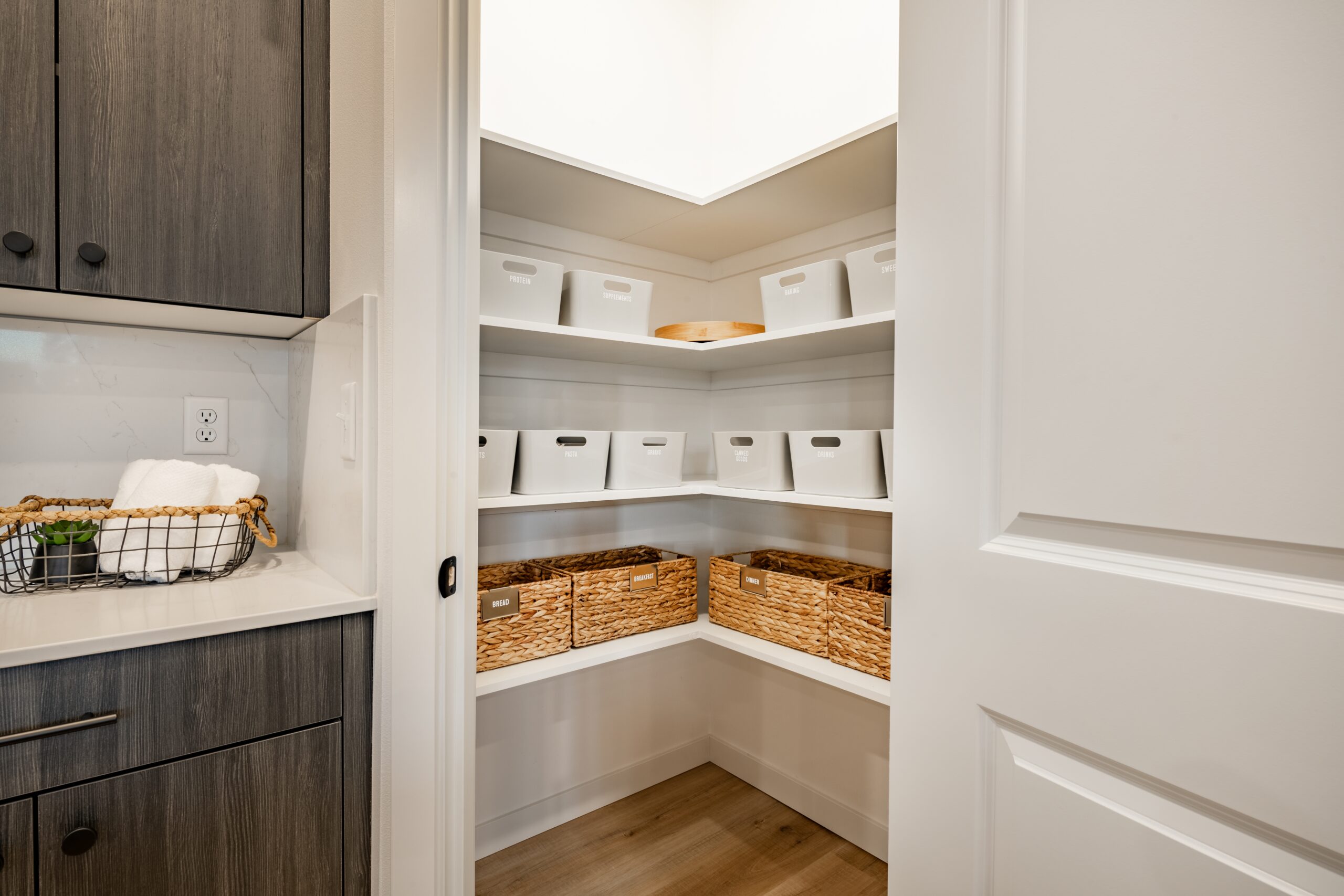
Fixed shelves in a rental closet or built-in pantry make this step stricter. You can’t raise a shelf to rescue a tall basket, so your real maximum is the opening height minus that clearance.
Step 3: Compare outside dimensions in the right order
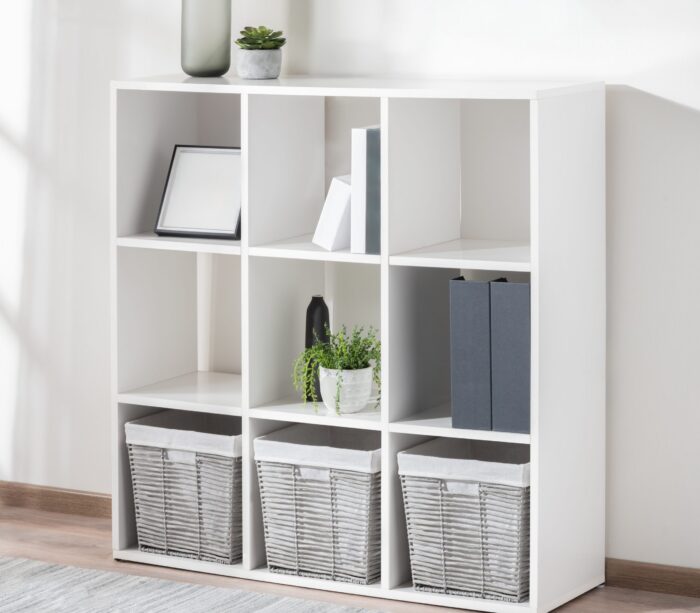
Don’t assume every listing puts width first. IKEA lists its DRÖNA box at 33 x 38 x 33 cm (13 x 15 x 13 inches) as width, depth, and height. It sells the box for the KALLAX unit, which it lists at 39 cm deep. On paper, that leaves about 1 cm, and the unit’s back panel may take some of it. Look for the dimension diagram on any listing and match each figure to your notes before trusting the order.
Compare outside measurements only. Capacity in liters doesn’t tell you whether a bin clears the shelf. If a woven or wire basket flares wider at the rim than at the base, use the rim number.
Step 4: Check the handles and the bin’s own opening
Handles are where listings get vague. Cutout handles usually sit within the wall and don’t add to the footprint. Rope loops, metal pulls, and leather tabs stick out from whichever side they face. If the photos show them projecting and the listing doesn’t say whether the dimensions include them, assume they don’t and add the extra. With the handle side facing forward, the bin needs more depth. Turned sideways, it needs more width.
Then look at the top. A narrow mouth or hinged lid means pulling the whole bin out to grab anything. For a high shelf you reach into daily, choose an open-top or low-front bin. Lidded bins suit seasonal things you get out twice a year.
Step 5: Mock it up, then run the slide test
Before ordering, tape a paper rectangle to the shelf at the listed footprint, or trim a cardboard box to the listed size and set it in place. Close the door, then pull the stand-in out with one hand.
It passes if it comes out level without catching and the door shuts. Any gap above should be either finger room or space you planned for, such as room for a second shallow bin. If you already own baskets that don’t fit where they are, measure them the same way and try them on another shelf before buying replacements. These small kitchen storage ideas may give them a new job.
A few empty inches are fine if you chose them. If the slide test shows a tall gap you didn’t plan for, look for a shorter bin with the same footprint, or a second shallow one to stack, rather than settling for the first basket that technically fits.